

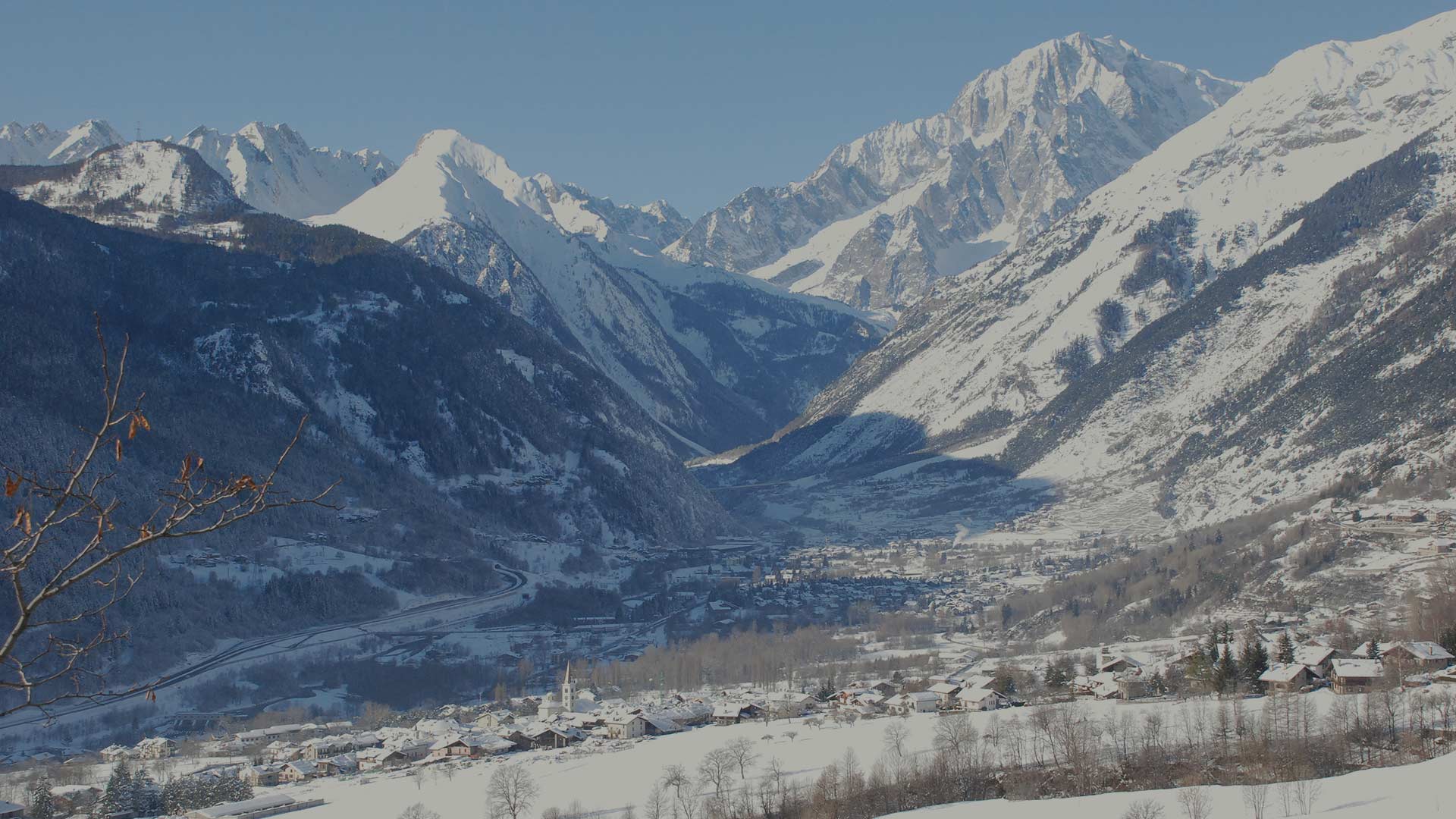

Aosta and its monuments
Aosta was known as the ‘Rome of the Alps’. Its history is linked to that of Rome, starting with its name: Augusta Praetoria, founded after the Romans’ victory over the Salassi, a proud local people. The foundation of the colony was essential to keep an eye on the Gauls and consolidate its dominance over the fertile Po Valley and northern Italy.
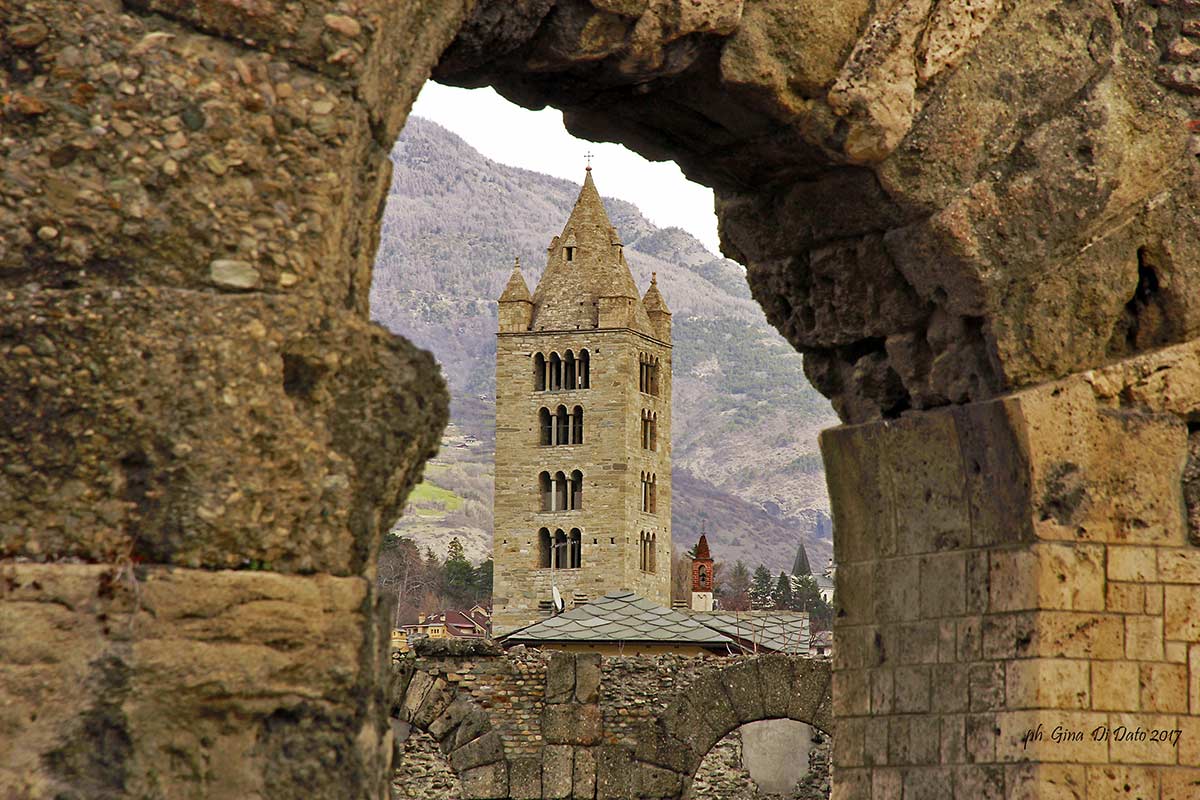
The Romans left Aosta a rich heritage of monuments: the Arch of Augustus, the Porta Praetoria, the Monumental Roman Theatre, the Amphitheatre, the Bridge and many other partially preserved sites. Added to this is the medieval legacy of the churches and convents, forts and castles in the surrounding area.
This archaeological and monumental wealth makes Aosta a beautiful Italian city of art, even if in the collective imagination it is associated with snow and skiing. Of course, the mountains are a fundamental part of Aosta’s life: they are the natural backdrop but also a tourist destination that attracts people from all over the world, in summer and winter. This makes Aosta a destination for all seasons, also thanks to the great tradition of hospitality of the Aosta Valley.
Aosta's Roman monuments
The legacy of the Roman Aosta is still evident throughout the city.
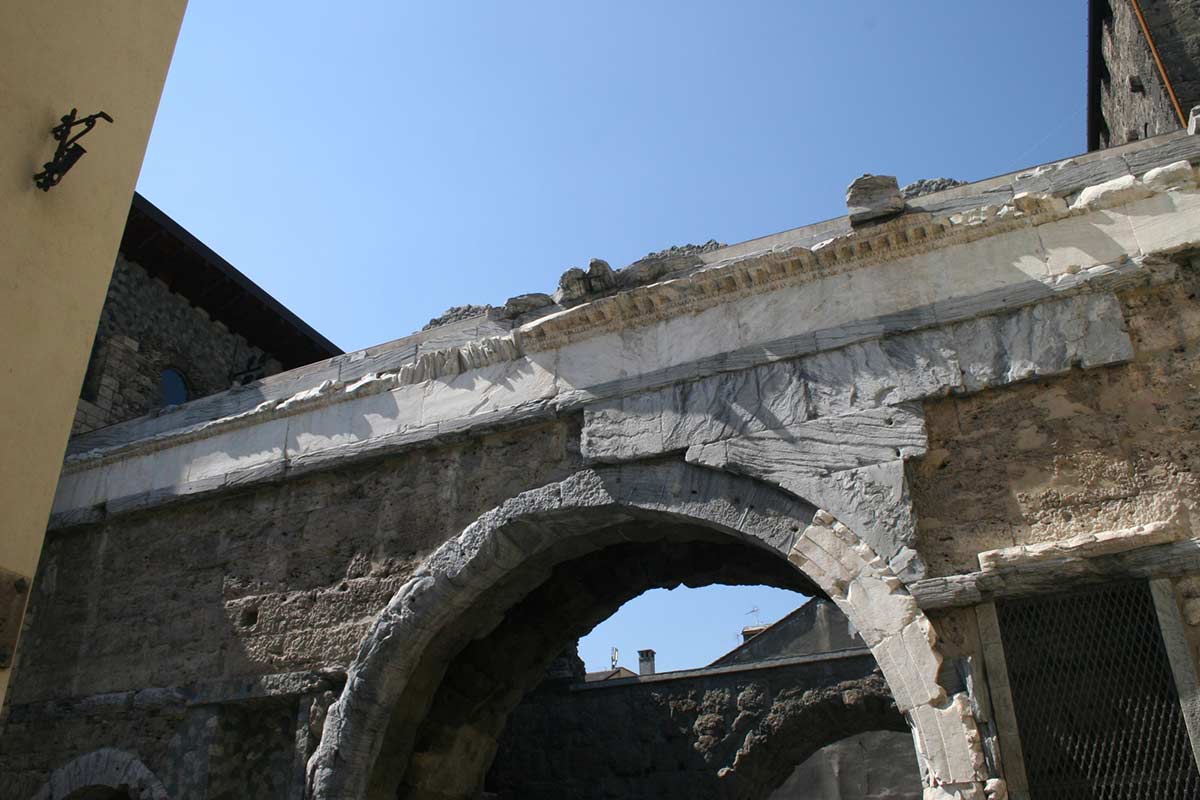
A tour of Augusta Praetoria can begin at the Arch of Augustus, which is located along the road leading to the entrance through the Porta Praetoria. The Arch dedicated to Emperor Augustus was built in 25 BC to celebrate the victory against the Salassi and the foundation of the new Roman colony. Continuing along Via Sant’Anselmo we come to the majestic gate, also built in 25 BC. It had three openings that are still visible today: a central one for chariots and two lateral ones for pedestrians. It was entirely covered with marble, as is partly visible on the eastern façade.
A few metres from the Porta Praetoria is the majestic Roman Theatre, with a façade 22 metres high, which makes the mastery of Roman architects immediately evident. The proscenium of 45 metres by 7 metres deep and the extensive tiers of seats could accommodate up to 4000 spectators. Today it hosts cultural events. What remains of the Amphitheatre is incorporated into the Convent of St Catherine: if you want to see the remains, just knock on the door and they will let you in!
Also worth seeing are the Roman Bridge and the Porta Decumana burial area, used for burials until the early Middle Ages, with various grave goods, glass and bronze objects and three cellae memoriae, i.e. three mausoleums built in the 4th century, as well as the remains of an early Christian basilica.
